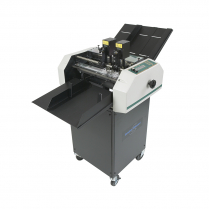
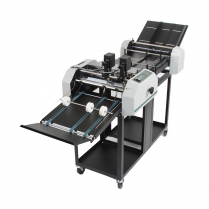
Digital numbering at Print & Finishing Solutions (PFS) is engineered to replace the high-maintenance, mechanical "crash" numbering process with automated, electronic precision. We utilize Graphic Whizard systems to provide versatile solutions that combine numbering, perforating, and scoring in a single efficient pass.
Graphic Whizard Numbering Technology
Graphic Whizard equipment is the industry standard for shops requiring high-speed sequencing for invoices, tickets, and multi-part carbonless forms.
- GW-6000 (Entry-Level Productivity): This electronic system delivers a production speed of up to 6,000 sheets per hour. It features a single numbering head and is capable of performing up to 10 numbering positions per sheet.
- GW-8000 (Pneumatic Precision): Moving to a pneumatic drive system, the GW-8000 increases throughput to 8,000 sheets per hour. This model includes a memory for up to 100 jobs and supports up to 100 numbering positions per sheet.
- GW-12000 (Industrial Throughput): Designed for high-volume environments, the GW-12000 reaches speeds of 12,000 sheets per hour. Like the GW-8000, it utilizes pneumatic drive for consistent depth and supports 100 positions and 100 job memories.
- Integrated Finishing: All GW models are capable of performing high-quality perforating and scoring simultaneously with the numbering process, reducing the need for multiple finishing steps.
Solving Numbering Production Failure Points
Q: How do I ensure consistent numbering depth on 4-part carbonless (NCR) forms? A: Mechanical numbering often results in "faint" numbers on the bottom copies of a set. The pneumatic drive found in the GW-8000 and GW-12000provides a consistent, high-impact strike that ensures the number "crashes" through all four layers with perfect legibility.
Q: Can I number and perforate a job in one pass? A: Yes. Graphic Whizard systems are designed to hold both numbering heads and perforating/scoring wheels at once. This allows you to produce a perforated and numbered ticket or invoice in a single pass, effectively doubling your finishing throughput.
Q: What is the benefit of an electronic numbering head over a traditional mechanical one? A: Traditional mechanical heads are prone to jams and require manual resetting. Graphic Whizard’s electronic heads allow for "skip" numbering (e.g., skip 2, skip 5) and repeat numbering to be programmed via the touch screen, eliminating the risk of sequencing errors during the run.
Technical Specification Matrix
|
Feature |
GW-6000 |
GW-8000 |
GW-12000 |
|---|---|---|---|
|
Max Speed (Sheets/Hr) |
6,000 |
8,000 |
12,000 |
|
Drive Type |
Electronic |
Pneumatic |
Pneumatic |
|
Numbering Positions |
10 |
100 |
100 |
|
Job Memories |
N/A |
100 |
100 |
|
Max Sheet Size |
18" x 18" |
18" x 18" |
18" x 18" |
Critical Risk Assessment
While the GW-6000 is a robust entry-point for smaller shops, its electronic strike is less suited for heavy, multi-part carbonless sets compared to the pneumatic force of the GW-8000 or GW-12000. For shops running high-mix job queues, the job memory features of the pneumatic models are essential to reduce setup time and prevent costly sequencing errors. However, users must ensure a clean air supply for pneumatic models to prevent valve contamination, which can lead to inconsistent numbering strikes. Selecting a numbering machine solely on speed is a risk if your substrate mix includes heavy cardstocks, where the impact force of the pneumatic head is the more critical factor for a professional finish.